The electric field and field lines
“
understand that an electric field is an example of a field of force and define electric field as force per unit positive charge; recall and use F = qE for the force on a charge in an electric field; represent an electric field by means of field lines
A field of force
Rub a balloon on your hair and it will tug at scraps of paper without touching them. That unsettle-the-instrument behaviour — force acting across empty space — is what the concept of a field exists to describe. Gravity did it first (A2 §13): rather than saying "the Earth pulls the apple", we say "the Earth fills the space around it with a gravitational field, and anything with mass placed in that field feels a force". The syllabus calls an electric field an example of a field of force — a region of space where a charge feels a force.
The payoff is the same as for gravity. The electric field strength at a point tells you, per coulomb, the force that any charge would feel if you placed it there — so the field can be mapped once, from the source charges alone, and then reused for every victim charge that wanders through. No second charge needs to be present for the field to exist; placing one there simply lets the field demonstrate itself.
Electric field strength at a point = force per unit POSITIVE charge acting on a small test charge placed at that point. E is a vector: its direction is the direction of the force on a POSITIVE charge. Unit: newtons per coulomb, N C⁻¹.
The definition, word-perfect
The definition earns one mark, and the scheme pays it only when the word positive appears:
Electric field strength is the force per unit positive charge (B1) — on a small test charge placed at the point.
Why positive? Because charges come in two signs, "force per unit charge" would be ambiguous — which sign's force do we report? The convention fixes the reporting direction: the field points whichever way a positive charge would be pushed. An electron placed in the very same field feels exactly the same-size force but points the opposite way, because its charge is negative. Every direction question in this topic — which plate attracts the electron, which way does the arrow go at point Q — is decided by this single sentence.
Multiplying the definition through by gives the working form:
— force on charge sitting in a field . With force in newtons and charge in coulombs, field strength comes out in N C⁻¹. (§02 shows why V m⁻¹ is a legitimate synonym.)
Field lines, the standard picture. Left: the radial field of a positive point charge Q — straight lines straight out of the charge, equally spaced in every direction, arrows pointing away (the push on a + test charge). Right: the uniform field between oppositely charged parallel plates — parallel, equally spaced lines running from the positive plate to the negative one. Same spacing everywhere means the same strength everywhere.
Field lines: the three rules
An electric field is represented by field lines — directed lines that encode both pieces of information the definition carries. Three rules govern every diagram you will ever draw or read:
- Direction. At any point, the field line runs in the direction of the force on a positive test charge — out of positive charges, into negative ones.
- Density is strength. Where lines crowd together the field is stronger; where they spread apart it is weaker. Equal spacing means equal strength — that is precisely what makes the plate field uniform.
- Lines never cross. At a crossing there would be two directions for one force — impossible. Lines start on positive charges and end on negative ones (or run off towards infinity).
The two patterns worth knowing by sight are in the figure above. A radial field spreads from an isolated point charge or charged sphere: strongest near the charge where the lines bunch, weakening as they fan out. A uniform field sits between oppositely charged parallel plates: identical strength at every point between them, edge effects ignored. Radial weakens with distance; uniform does not weaken anywhere inside the plates — exam questions lean hard on this contrast.
pattern | source | line shape | strength |
|---|---|---|---|
radial | isolated point charge or charged sphere | straight rays out of (+) or into (−) the charge | strongest close to the charge, weakening as lines spread — falls off with distance |
uniform | oppositely charged parallel plates | parallel, equally spaced, + plate → − plate | same value at every point between the plates |
The two field-line patterns of this syllabus. 'Uniform' is not a decoration word — it is the licence to use ONE value of E everywhere between the plates.
Field strength is force per unit positive charge, so F = qE gives the force — along E for a + charge, against E for a − charge.
Invented demo — one field, two charges
In a laboratory demonstration, a uniform field of strength fills the space between two parallel plates.
(i) Calculate the magnitude of the force on a polystyrene ball carrying charge placed between the plates, and state its direction.
(ii) Calculate the magnitude of the force on an electron at the same place, and state its direction relative to the field.
Show full working
- 1
(i) Name the relation: force on a charge in a field is
This is the definition rearranged — quote it before substituting, so the examiner sees which idea does the work.
- 2
Identify the symbols here: and .
Nano means ×10⁻⁹ — convert BEFORE multiplying. Naming each symbol with its value is the habit that stops wrong-slot errors.
- 3
Substitute:
One multiplication per line. Prefactors and exponents can be handled separately: 2.0 × 2.5 = 5.0 and 10⁻⁹ × 10⁵ = 10⁻⁴.
- 4
Simplify:
The charge is positive, so the force acts along the field — from the positive plate towards the negative one (B1-style direction mark).
Magnitude AND direction: the question asked for both. Positive charge ⇒ force parallel to E, always.
- 5
(ii) Same substitution with the electron:
The electron's charge is negative, so its force points opposite to the field — towards the positive plate.
Same formula, same E — only the sign of q changed, and with it the direction. The electron feels about ten billion times less force than the ball, yet it accelerates far harder because its mass is tiny (§03).
(i) F = qE = 5.0×10⁻⁴ N, along the field (towards the negative plate). (ii) F = 4.0×10⁻¹⁴ N, opposite to the field (towards the positive plate).
Direction answers should name something physical ('towards the negative plate'), not just 'left' or 'up' — schemes credit the physics, not the geometry.
Defining electric field as "force per unit charge".
Force per unit POSITIVE charge.
Mark schemes require the word 'positive' — it is what pins down the direction convention. Omitting it loses the definition mark even though the magnitude is right.
Drawing field lines crossing at a point where two charges' influences seem to meet.
Field lines NEVER cross — one point, one force direction.
A crossing would mean two different forces on the same test charge at the same place, which is unphysical. Schemes penalise crossings instantly.
Reading a field line as the trajectory of a moving charge.
Field lines show the DIRECTION OF FORCE at each point, not the path a particle travels.
Only a particle released from rest follows a field line. Anything entering sideways moves like a projectile (§03) — the line and the path are different objects.
Your turn
One real definition mark from 2025, one direction-and-magnitude drill, and one real sketching question from the same paper family.
- 19702/42 O/N 2025 Q6(a)1 mark
Define electric field at a point.
Stuck? Show hint
Per unit WHAT sort of charge?
Show solution
- 1
Electric field at a point is the force per unit positive charge acting on a small test charge placed at that point (B1).
One clause, one mark. The scheme's model answer is exactly four content words: force per unit positive charge.
AnswerForce per unit positive charge (on a small test charge placed at the point).
- 1
- 23 marks
A uniform field of strength acts horizontally to the right.
A particle carrying charge is placed in the field.
(i) Calculate the magnitude of the force on the particle.
(ii) State the direction of the force.
(iii) The particle is replaced by one carrying . Without recomputing from scratch, state the new force.Stuck? Show hint
(iii) compare the new charge to the old: twice the size, opposite sign.
Show solution
- 1
(i)
Magnitude uses |q| — the sign goes into the DIRECTION answer, not into a negative force. Prefactor 3.2 × 4.0 = 12.8, exponent −19 + 4 = −15.
- 2
(ii) The charge is negative, so the force acts opposite to the field: horizontally to the left.
Negative charge ⇒ antiparallel to E. This is the sentence the whole direction-convention exists to produce.
- 3
(iii) The charge has doubled and reversed sign compared with (i): same-size force,
directed to the right — along the field.
F ∝ q, so ratios finish the job without re-substitution. Doubling |q| doubles F; flipping the sign flips the direction.
Answer(i) 1.3×10⁻¹⁴ N. (ii) to the left, opposite the field. (iii) 2.6×10⁻¹⁴ N to the right, along the field.
- 1
- 39702/42 O/N 2025 Q6(b)(i)2 marks
An isolated conducting sphere carries positive charge.
On a copy of the figure, draw field lines to represent the electric field outside the sphere due to the charge on the sphere.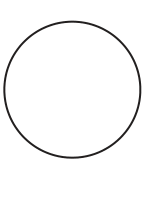
Fig. 6.1 from the question paper: the charged conducting sphere, with space outside it for the field lines.
Stuck? Show hint
Two things earn the two marks: the SHAPE of the lines and their ARROWHEADS.
Show solution
- 1
Shape clause: the lines are radial — straight, evenly spaced rays leaving the surface perpendicular to it, in every direction (B1).
Outside a sphere the field is identical to that of a point charge at its centre (§05 proves this), so the ray pattern is the required answer. Bunched-at-one-side sketches lose this mark.
- 2
Direction clause: every arrowhead points away from the sphere (B1) — the charge is positive, and field lines leave positive charge.
Radial shape with inward arrows would describe a NEGATIVE sphere — the arrows are a separate mark precisely because the direction carries separate information.
AnswerEqually spaced radial lines leaving the surface in all directions, arrowheads pointing away from the sphere.
- 1
The rest of this note
Can you do all of these?
Define electric field word-perfectly: force per unit POSITIVE charge — the word 'positive' decides every direction in the topic
Draw field lines correctly: arrows give the force direction on a + charge, closer spacing means stronger field, lines never cross
Contrast radial fields (point charge, charged sphere) with the uniform field between parallel plates
Calculate E = ΔV/Δd with the separation converted to metres, quoting N C⁻¹ or V m⁻¹ with the answer
Deduce plate polarity from the observed motion of a named charge — electrons accelerate towards the positive plate
Track a charged particle through plates: a = qE/m, parabolic path inside the field, straight line once outside
Derive and use v = √(2qV/m) from qV = ½mv² for a particle accelerated from rest through a p.d.
State Coulomb's law in words (force ∝ product of charges, ∝ 1/r²) AND in symbols — both forms are examined
Treat a charged conducting sphere, from outside, as a point charge at its centre; know E = 0 inside the conductor
Compute E = Q/(4πε₀r²) and V = Q/(4πε₀r) at any distance, converting pm/nm/cm before substituting
Define electric potential verbatim: work done per unit positive charge moving a small test charge from infinity to the point
Superpose potentials as scalars WITH SIGNS — and find where the total potential is zero
Evaluate Eₚ = Qq/(4πε₀r) keeping the minus sign for unlike charges, and run energy conservation KE ↔ Eₚ
Read field strength off a V–x graph as minus the gradient: steepest slope = strongest field, flat = zero field