Economics 9708/22 — February/March 2022
Cambridge AS Level · AS Level Data Response and Essays · worked solutions for every part, with the mark scheme
Topics Balance of Payments · International Trade and Comparative Advantage · Price Stability · Elasticities of Demand · (Legacy) - Money · Monetary Policy · +7 more
Aspects of Turkey’s macroeconomic performance and monetary policy
Figs 1.1, 1.2 and 1.3 show aspects of Turkey’s macroeconomic performance for the period August 2019 to April 2020.
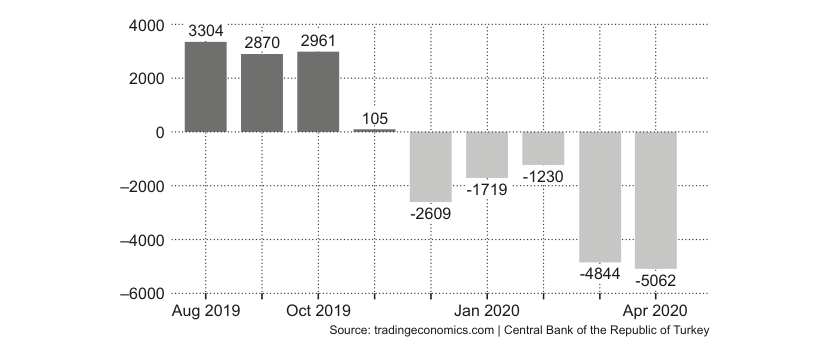
Fig. 1.1: Turkey Current Account Balance (US$m), August 2019 to April 2020
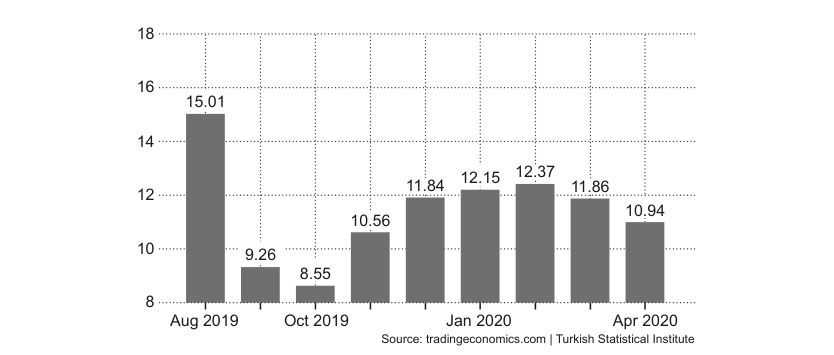
Fig. 1.2: Turkey annual inflation rate (%) each month, August 2019 to April 2020
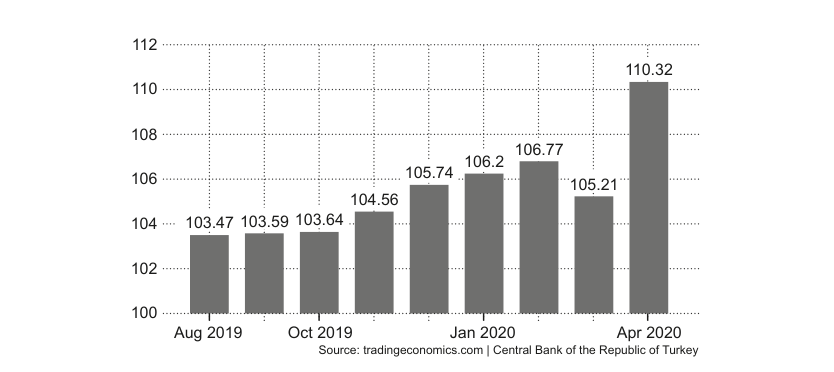
Fig. 1.3: Turkey Terms of Trade, August 2019 to April 2020
Turkey’s central bank expected to cut interest rates for 10th time in a row
Turkey’s central bank is expected to approve a further reduction in interest rates. Most economists predict that interest rates will fall. However, some wonder whether rates will continue to fall or whether the bank may soon need to raise them to reduce inflation. Turkey’s central bank has cut the interest rate from 24% in July 2019. It is now expected that the rate will be cut to 8%.
Annual consumer price inflation was 8.6% in October 2019 and is now 11.4%, reducing the international competitiveness of Turkey’s goods and services. This means that if the rate of interest is cut to 8%, the real interest rate will be negative.
The real interest rate in Turkey, calculated by subtracting annual inflation, is among the lowest in the world. It is negative at -3.4% compared with -0.6% in the Euro area and -0.3% in South Africa. The negative rate in Turkey discourages foreign investors from lending to the Turkish government, potentially affecting the value of Turkey’s currency, the lira. The currency fell to a record low of 7.3 per US dollar in early May, mainly due to concerns over the level of interest rates.
Analysts differ over whether the expected interest rate cut will be the central bank’s last or whether it will continue to reduce borrowing costs. Some think it will generate inflation as the economy recovers from the impact of the COVID-19 pandemic. However, others are suggesting that the bank may continue to cut the interest rate because the Turkish government appears determined to do everything it can to speed up the economic recovery.
Source: Ahval, 25 June 2020
With reference to Fig 1.1 describe how Turkey’s current account balance has changed between August 2019 and April 2020.
How could the data in Fig 1.2 be used to explain the changes in the terms of trade between August 2019 and April 2020 as shown in Fig 1.3?
‘Consumer price inflation was 8.6% per annum in October 2019 and is now 11.4%, reducing the international competitiveness of Turkey’s goods and services.’
Explain, using the concept of price elasticity of demand, how the increase in inflation has caused the change in Turkey’s current account of the balance of payments between October 2019 and April 2020 as shown in Fig 1.1.
Explain how a negative real rate of interest in Turkey will affect the function of money as
a standard of deferred payment.
a store of value.
Discuss, with the help of an aggregate demand and aggregate supply diagram, whether further cuts in Turkey’s interest rate are likely to ‘generate inflation’ or ‘speed up the economic recovery’.
The rest of this paper
3 more questions- Q2Production Possibility Curves · Economic Systems20M
- Q3Price Elasticity of Supply · Fiscal Policy · Supply-Side Policy20M
- Q4Protectionism20M