Economics 9708/42 — October/November 2019
Cambridge A-Level · A Level Data Response and Essays · worked solutions for every part, with the mark scheme
Topics Economic Growth and Sustainability · Money and Banking · Effectiveness of Macroeconomic Policies · Components of Aggregate Demand · Efficiency and Market Failure · Externalities, Social Costs and Benefits · +9 more
The Economic Outlook for Japan
In 2017, the forecast of the Bank of Japan (the country’s central bank) was that Japan’s economy was likely to enjoy moderate growth. Domestic demand was likely to increase due to spending in both the corporate and household sectors. Expansionary monetary policy and fiscal spending by the government had produced a large-scale stimulus.
As part of the Japanese government’s economic strategy, progress was expected in overcoming deflation through quantitative easing. Supply-side measures included regulatory and institutional reforms; increased labour participation by women and the elderly, and support for firms in their efforts to improve productivity.
The Bank of Japan stated that business investment was likely to continue to increase, supported by expansionary monetary policy, heightened growth expectations, and increases in demand related to the Olympic Games to be held in Japan in 2020. Private consumption was expected to continue to increase as employee incomes continued to improve. Public investment was projected to increase during 2017, due mainly to government measures and was expected to remain at a relatively high level after 2017.
Meanwhile, other advanced economies were expected to continue to grow steadily and a recovery in emerging economies was expected as a result of their own policy measures and the growth in the advanced economies. Japan’s exports were expected to rise as a result of an improvement in the economies of its trading partners and the depreciation of Japan’s currency, the yen.
There was also an upward revision of GDP following a change in the calculation of GDP statistics. The projected financial conditions suggested that real interest rates were likely to remain very low.
Source: Bank of Japan, Outlook for Economic Activity and Prices, January 2017
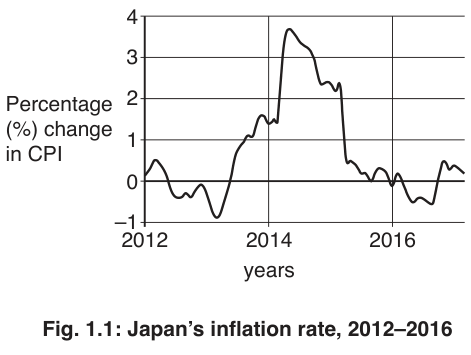
Fig. 1.1: Japan’s inflation rate, 2012–2016
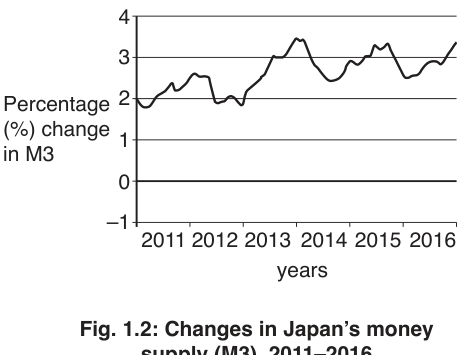
Fig. 1.2: Changes in Japan’s money supply (M3), 2011–2016
Source: Trading Economics, 2017 and Bank of Japan Annual Review, 2017
Identify two positive influences on Japan’s economic growth.
To what extent do Fig. 1.1 and Fig. 1.2 support Friedman’s view that ‘inflation is always and everywhere a monetary phenomenon’?
Explain the likely impact of quantitative easing on the Japanese economy.
Discuss the possible effects on the Japanese economy of the changes in supply-side policy and international economic events described in the article.
The rest of this paper
6 more questions- Q2Efficiency and Market Failure · Externalities, Social Costs and Benefits25M
- Q3Utility Theory · Equity, Poverty and Redistribution25M
- Q4Performance of Firms in Different Market Structures · Market Structures · Objectives and Pricing Policies of Firms25M
- Q5Wage Determination and Labour Market Intervention25M
- Q6The Multiplier and National Income Determination · Macroeconomic Objectives and Policy Conflicts25M
- Q7Economic Development and Living Standards25M