Economics 9708/43 — May/June 2017
Cambridge A-Level · A Level Data Response and Essays · worked solutions for every part, with the mark scheme
Topics Macroeconomic Objectives and Policy Conflicts · Wage Determination and Labour Market Intervention · Demand for and Supply of Labour · Economic Development and Living Standards · Efficiency and Market Failure · Utility Theory · +8 more
Pay and the rate of inflation
In the United Kingdom (UK) in the last three months of 2014 the employment rate was at a record high (73.2%) and total pay had its highest increase since before the world financial crisis. Total pay (regular pay plus bonuses) rose by an average of 2.1% between October and December 2014. This was partly because of a large growth in bonus payments in the private sector. Average weekly regular pay rose by 1.7% in that period.
Private sector total pay rose by an average of 2.5% while workers who were employed in the public sector saw average total pay growth of only 0.7% because of government controls over pay and an absence of bonuses.
By comparison, annual inflation fell to 0.5% in December 2014 and to 0.3% in January 2015. The Prime Minister said that high employment, stronger productivity and low inflation rates are key matters helping economic recovery and an increase in living standards. However, while total hours worked grew by 0.8% in the last three months of 2014, GDP growth was 0.5% implying that output per head fell over the quarter and the increased employment was not boosting labour productivity. This is not good for a long-term improvement in living standards even if inflation is very low.
The chief executive of an oil company said that oil companies will have to adapt to a new era of lower prices and a greater emphasis on reducing carbon emissions in order to survive. This is already happening by way of short-term market forces as costs of production come down but long-term structural changes will be needed. His remarks came after two international oil companies announced large reductions in both fixed and variable costs as oil prices fell by 50% in the last six months of 2014 amid a surplus of supply and reduced demand.
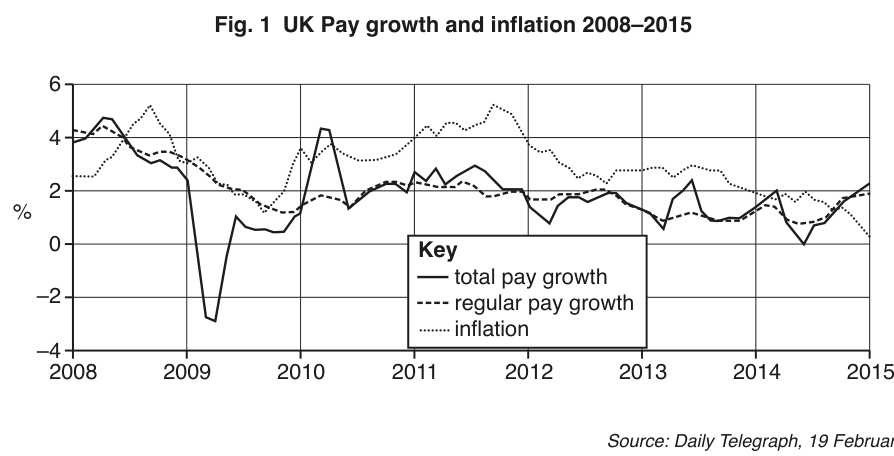
Fig. 1 UK Pay growth and inflation 2008–2015
Source: Daily Telegraph, 19 February 2015
The article says that public sector workers had an average increase in pay of 0.7% compared with a 2.5% increase for private sector workers. State two reasons given in the information for this.
“In 2014, despite the rise in earnings, both regular pay and real total pay have gradually fallen since 2008.”
Use Fig. 1 to determine whether or not this is true.
In January 2015 the workforce of an oil company demanded a pay increase.
How could the company use the evidence from the information to oppose the demand?
Discuss why inflation and the rate of growth of total pay are significant economic indicators.
The rest of this paper
6 more questions- Q2Efficiency and Market Failure25M
- Q3Utility Theory · Indifference Curves and Budget Lines25M
- Q4Short-Run and Long-Run Production · Costs of Production · Revenue and Profit · Market Structures · Performance of Firms in Different Market Structures25M
- Q5Demand for and Supply of Labour · Wage Determination and Labour Market Intervention25M
- Q6Economic Growth and Sustainability · Economic Development and Living Standards · Macroeconomic Objectives and Policy Conflicts25M
- Q7Economic Development and Living Standards · Effectiveness of Macroeconomic Policies · Macroeconomic Objectives and Policy Conflicts25M