Economics 9708/41 — May/June 2017
Cambridge A-Level · A Level Data Response and Essays · worked solutions for every part, with the mark scheme
Topics Economic Growth and Sustainability · Growth and Survival of Firms · Market Structures · Externalities, Social Costs and Benefits · Exchange Rate Systems · Utility Theory · +13 more
Changes in the world oil market and their effects
Founded in 1960, the Organisation of Petroleum Exporting Countries (OPEC), consisted of five countries all of whom produced oil. OPEC’s success, with Saudi Arabia as its market leader, encouraged other oil exporting countries to join. There are now 12 OPEC member countries, including Iran, Nigeria and Venezuela. OPEC is responsible for over 35% of world oil production, working together to fix prices and control output.
OPEC has faced various external shocks. In recent years, the financial crisis 2008–2011 reduced global demand for oil. Also, since 2012, non-OPEC oil supplies have increased, as shown in Fig. 1, mainly due to the use of fracking – a process of extracting oil from rock using very expensive drilling equipment. This has happened in spite of opposition to fracking by environmentalists who accuse the fracking companies of causing minor earthquakes and polluting underground water sources.
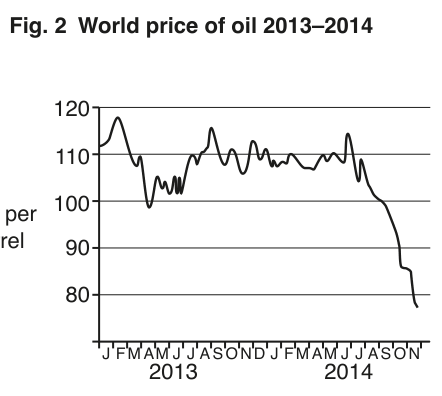
The main oil producer using fracking is the United States (US) which has become almost self-sufficient in oil and consequently does not need to rely on OPEC. In 2014, the US even began to export its oil, especially to Europe as a rival to OPEC and Russia. This had an effect on the price of oil as shown on the chart in Fig. 2.
There have been both winners and losers from this change in production of oil. While all oil importing countries have become winners as the price of oil declines, undoubtedly the US has strengthened its economy the most. The fracking boom has increased consumer spending in the US, which has been a key element in the recovery of the US economy from the financial crisis.
The losers are OPEC’s members that are dependent on oil as the main source of revenue. Nigeria greatly overestimated the price of oil and, as a result, it had to devalue its currency in November 2014, raise taxes on luxury items and cut government spending by 6%.
Fig. 1 Supply of oil 2012–2015
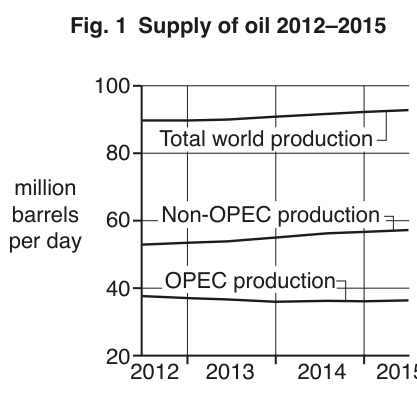
Fig. 2 World price of oil 2013–2014
Despite the fall in oil prices, in January 2015 Saudi Arabia refused to agree to demands from other OPEC members to cut oil supplies in order to keep prices high. Saudi Arabia was happy to allow oil prices to fall further in order to put US fracking companies out of business.
Source: The Times, 5 December 2014 and 7 January 2015
Define what is meant by a cartel and explain why a cartel might be formed.
What evidence is there in the information that OPEC is a cartel?
Given the information above, analyse with the help of an appropriate diagram whether the overall price change shown in Fig. 2 is consistent with what would be expected in the market for oil.
Is there any evidence in the information that might lead to the conclusion that the US economy is a winner in the short run but could become a loser in the long run?
The rest of this paper
6 more questions- Q2Utility Theory · Indifference Curves and Budget Lines25M
- Q3Money and Banking · Effectiveness of Macroeconomic Policies25M
- Q4Wage Determination and Labour Market Intervention · Demand for and Supply of Labour25M
- Q5Economic Development and Living Standards · Characteristics of Countries at Different Levels of Development · Economic Growth and Sustainability · Relationships Between Countries at Different Levels of Development25M
- Q6Macroeconomic Objectives and Policy Conflicts · Economic Growth and Sustainability · Components of Aggregate Demand · The Multiplier and National Income Determination25M
- Q7Efficiency and Market Failure · Government Policies to Correct Market Failure25M