Economics 9708/42 — May/June 2015
Cambridge A-Level · A Level Data Response and Essays · worked solutions for every part, with the mark scheme
Topics Components of Aggregate Demand · Economic Development and Living Standards · Short-Run and Long-Run Production · Revenue and Profit · Equity, Poverty and Redistribution · Macroeconomic Objectives and Policy Conflicts · +13 more
Food scarcity: a world crisis
In 2012, families in poorer countries were forced to have days without food each week. A report by a large children’s charity claimed that such days were now a part of life for up to 24% of families in India, 27% in Nigeria and 14% in Peru.
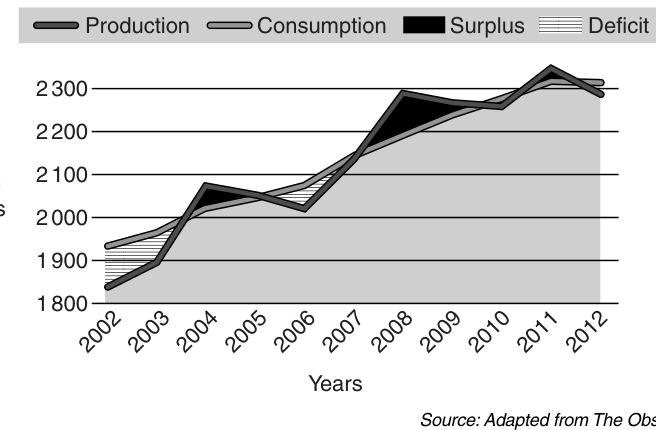
One of the reasons for this was the changing condition of demand and supply in world cereal markets as shown in Fig. 1.
Fig. 1: World cereal market
Source: Adapted from The Observer, 14/10/2012
Droughts and heatwaves in 2012 reduced production in some of the world’s leading cereal producers such as the United States (US), Ukraine and Australia. This shortage was combined with the increase in demand for corn to make biofuels. In 2012, more corn was used for ethanol production to fuel cars in the US than was used for animal feed. As a consequence, prices of meat and dairy products rose as farmers found it more expensive to feed cattle, pigs and poultry. This was particularly noticeable, as a general rise in incomes resulted in an increased consumption of meat. Stocks of cereals were used to reduce the shortages.
During 2012, the world cereal harvest was expected to be 3% lower than that of 2011. More significantly, it was expected to be 4% lower in per capita terms because the world’s population increased by 80 million in 2012.
The changes in the cereal market affected developing and developed economies in different ways. On average, people living in the US spend 9% of their income on food, while those living in the developing world spend between 50% and 70% of their income on food. World cereal prices rose between 10% and 25% in 2012, but in countries affected by drought in Africa, such as Mozambique, they more than doubled.
A charity organisation has forecasted that rice and wheat prices will double again in the next 20 years with disastrous consequences for the poor.
Sources: Adapted from The Observer and The Independent, October 2012
Identify three reasons why there was a problem with the world cereal market in 2012.
Explain whether the changes in the world cereal market would have been likely to increase the profits of all farmers.
To what extent does evidence in the article support the argument that developing and developed countries are affected differently by rising cereal prices?
Choose two government macroeconomic aims and consider how the changes in the world cereal market in 2012 might have affected a government’s ability to achieve those aims.
The rest of this paper
6 more questions- Q2Indifference Curves and Budget Lines · Employment and Unemployment25M
- Q3Performance of Firms in Different Market Structures · Growth and Survival of Firms · Objectives and Pricing Policies of Firms25M
- Q4Wage Determination and Labour Market Intervention25M
- Q5The Multiplier and National Income Determination · Components of Aggregate Demand · Effectiveness of Macroeconomic Policies25M
- Q6Economic Growth and Sustainability · Externalities, Social Costs and Benefits · Economic Development and Living Standards · Characteristics of Countries at Different Levels of Development25M
- Q7Efficiency and Market Failure · Government Policies to Correct Market Failure25M