Biology 9700/21 — May/June 2019
Cambridge AS Level · AS Level Structured Questions · worked solutions for every part, with the mark scheme
Topics Biological Molecules · Cell Structure · Immunity · Cell Membranes and Transport · Enzymes · The Mitotic Cell Cycle · +3 more
Antibody molecules are proteins that show primary structure, secondary structure, tertiary structure and quaternary structure.
Fig. 1.1 shows a ribbon diagram of an antibody molecule.
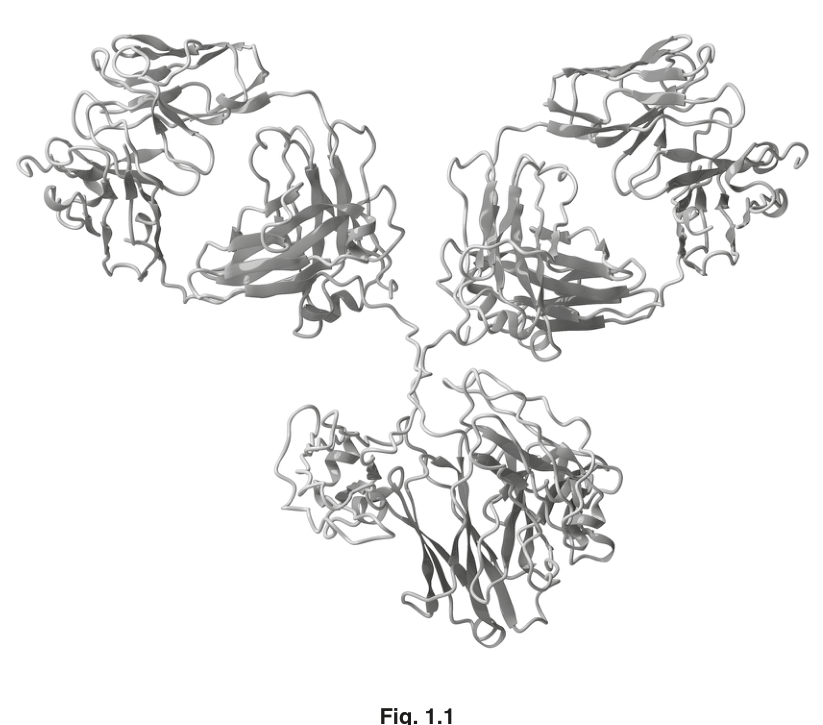
Describe how Fig. 1.1 shows the secondary structure and tertiary structure of the antibody molecule.
secondary structure ______
tertiary structure ______
Fig. 1.2 is a transmission electron micrograph of a hybridoma cell.
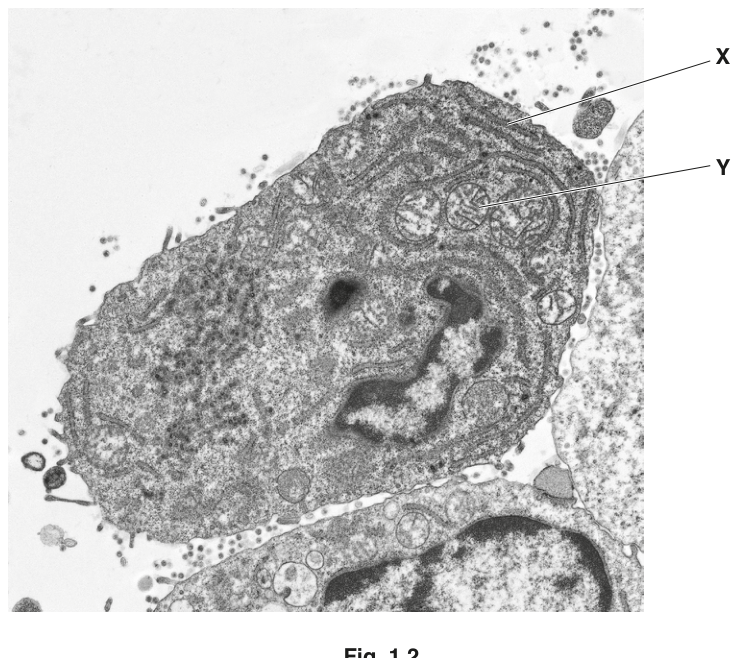
The hybridoma cell in Fig. 1.2 synthesises and secretes molecules of a monoclonal antibody.
State the roles of the structures labelled X and Y in the production of antibody molecules in the hybridoma cell.
X ______
Y ______
The hybridoma method for the production of monoclonal antibodies involves a number of stages. One of these stages is the formation of hybridoma cells.
Outline the stage in which hybridoma cells are formed.
Outline the use of monoclonal antibodies in the treatment of disease.
The rest of this paper
5 more questions- Q2Cell Membranes and Transport · Biological Molecules9M
- Q3Enzymes9M
- Q4The Mitotic Cell Cycle · Transport in Plants10M
- Q5Transport in Mammals12M
- Q6Nucleic Acids and Protein Synthesis · Cell Structure9M