Biology 9700/43 — October/November 2022
Cambridge A-Level · A Level Structured Questions · worked solutions for every part, with the mark scheme
Topics Genetic Technology · Inheritance · Classification, Biodiversity and Conservation · Selection and Evolution · Homeostasis · Photosynthesis · +3 more
The wild Bactrian camel, Camelus ferus, lives only in the desert regions of Mongolia and northern China.
Fig. 1.1 shows a wild Bactrian camel.
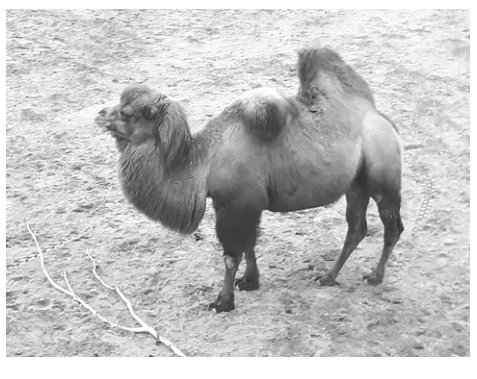
The wild Bactrian camel is at risk of extinction in the wild and is categorised as critically endangered by the International Union for Conservation of Nature (IUCN). There are only 950 wild Bactrian camels left in their natural habitat.
Suggest reasons why the wild Bactrian camel has become critically endangered.
Outline the role of the IUCN.
Some zoos use assisted reproduction techniques, such as embryo transfer, in their captive breeding programmes for endangered species. Embryo transfer has resulted in domesticated dromedary camels giving birth to wild Bactrian camel calves.
Describe the procedure of embryo transfer in a mammal such as a camel.
The rest of this paper
9 more questions- Q2Photosynthesis9M
- Q3Energy and Respiration14M
- Q4Genetic Technology · Inheritance13M
- Q5Selection and Evolution · Classification, Biodiversity and Conservation · Genetic Technology10M
- Q6Selection and Evolution · (outdated) Crop Plants · Genetic Technology · Inheritance13M
- Q7Inheritance8M
- Q8Homeostasis11M
- Q9Control and Coordination8M
- Q10Homeostasis5M