Biology 9700/52 — May/June 2020
Cambridge A-Level · Planning, Analysis and Evaluation · worked solutions for every part, with the mark scheme
Topics Planning · Analysis, Conclusions and Evaluation
Woodlice are small invertebrates that live in cool, damp places under wood and stones.
Some students determined the respiration rate of woodlice at different temperatures.
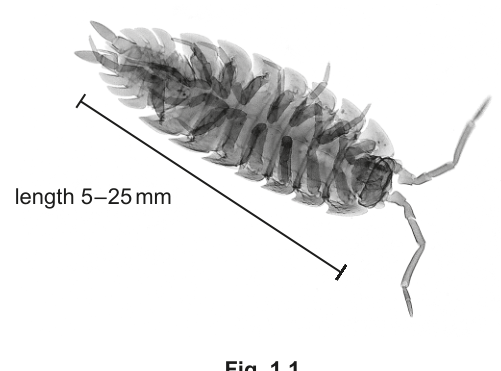
Fig. 1.1 shows a single woodlouse.
The students tested the hypothesis:
For each increase in temperature the volume of oxygen absorbed will double.
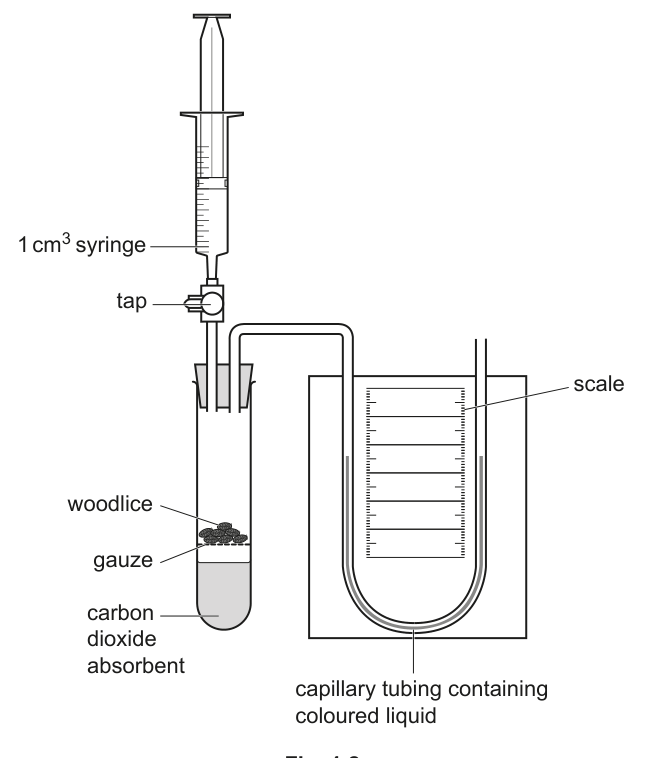
Fig. 1.2 shows the respirometer that the students used.
State the independent variable and the dependent variable in this investigation.
independent variable = ______
dependent variable = ______
The students decided to measure oxygen uptake for 5 minutes using a range of temperatures from to .
Suggest why the students chose this range of temperatures and suggest a suitable interval that the students should use.
State a suitable control for this investigation.
State why the carbon dioxide absorbent solution was placed in the tube.
Suggest one variable in this investigation that cannot be standardised.
Describe a method by which the students could set up the respirometer and use it to test their hypothesis:
For each increase in temperature the volume of oxygen absorbed will double.
Your method should be set out in a logical order and be detailed enough to let another person follow it.
Each length of the capillary tubing containing coloured liquid in Fig. 1.2 has a volume of .
Describe how the students could use their results to calculate the rate of respiration for each temperature from their results.
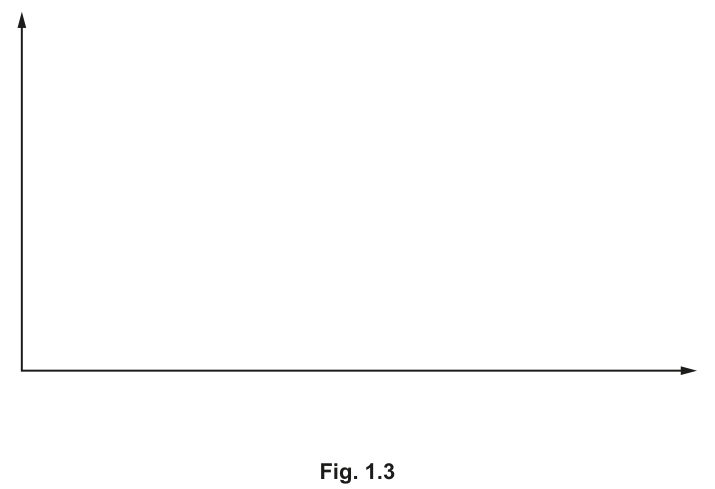
Use the axes in Fig. 1.3 to show the expected shape of the curve if the hypothesis is correct.
For each increase in temperature the volume of oxygen absorbed will double.
Include the labels and units for each axis.
The students used the same apparatus to determine the output of carbon dioxide by the woodlice at . The students used this result and the result for oxygen uptake at to calculate the respiratory quotient (RQ).
The RQ was calculated as 0.95.
State what conclusion can be made from this RQ value.
The rest of this paper
1 more questions- Q2Planning · Analysis, Conclusions and Evaluation9M