Biology 9700/41 — October/November 2018
Cambridge A-Level · A Level Structured Questions · worked solutions for every part, with the mark scheme
Topics Classification, Biodiversity and Conservation · Selection and Evolution · Inheritance · Genetic Technology · Energy and Respiration · Photosynthesis · +2 more
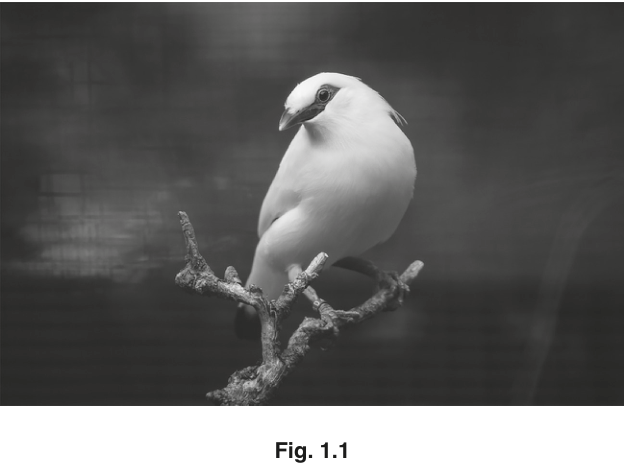
The Bali starling, Leucopsar rothschildi, is found on the island of Bali, Indonesia.
Fig. 1.1 shows a Bali starling.
The International Union for Conservation of Nature (IUCN) is the world’s largest global environmental organisation. The IUCN Red List of Threatened Species™ evaluates the conservation status of plant and animal species.
The Bali starling is categorised as critically endangered on the IUCN Red List, which means that it is nearly extinct in the wild.
The Bali starling is protected by Indonesian law and trapping of the birds for sale as pets is illegal. In 2001 there were only six Bali starlings in the wild and about 1000 in captivity.
Suggest reasons, other than the trapping of the birds for sale as pets, for the very low numbers of Bali starlings in the wild.
Describe the roles zoos can take in the protection of the Bali starling.
Explain the consequences on genetic biodiversity of having a wild population of just six birds.
The rest of this paper
9 more questions- Q2Inheritance11M
- Q3Inheritance · Selection and Evolution14M
- Q4Classification, Biodiversity and Conservation · Selection and Evolution9M
- Q5Genetic Technology14M
- Q6Energy and Respiration6M
- Q7Photosynthesis8M
- Q8Control and Coordination14M
- Q9Classification, Biodiversity and Conservation15M
- Q10Homeostasis15M