Biology 9700/42 — May/June 2018
Cambridge A-Level · A Level Structured Questions · worked solutions for every part, with the mark scheme
Topics Selection and Evolution · Classification, Biodiversity and Conservation · Inheritance · Control and Coordination · Genetic Technology · Energy and Respiration · +3 more
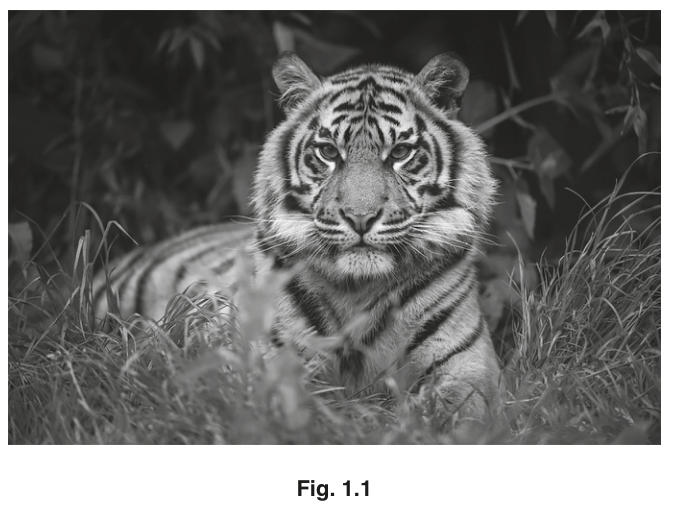
The Sumatran tiger lives on the island of Sumatra, Indonesia.
Fig. 1.1 shows a Sumatran tiger.
The International Union for Conservation of Nature (IUCN) is the world’s largest global environmental organisation. The IUCN Red List of Threatened Species™ evaluates the conservation status of plant and animal species.
The Sumatran tiger is categorised as critically endangered on the IUCN Red List. There are approximately 400 Sumatran tigers left in the wild.
Suggest reasons why the Sumatran tiger has become critically endangered.
Some zoos in Europe have captive breeding programmes for the Sumatran tiger, which breeds well in captivity. Once cubs have reached maturity they may be moved to other zoos. For example, as part of a coordinated breeding programme carried out in 2013, one tiger born in Chester Zoo in England was moved to France and another tiger born in the same zoo was moved to Germany. This type of coordinated breeding programme is essential for the survival of the Sumatran tiger.
Explain why it is important to the gene pool of Sumatran tigers to move tigers from one zoo to another.
Some animals do not breed well in captivity.
List the methods of assisted reproduction that may be used with animals that do not breed well in captivity.
The rest of this paper
9 more questions- Q2Inheritance10M
- Q3Inheritance · Selection and Evolution13M
- Q4Selection and Evolution10M
- Q5Genetic Technology14M
- Q6Energy and Respiration7M
- Q7Photosynthesis · (outdated) Crop Plants8M
- Q8Control and Coordination15M
- Q9Classification, Biodiversity and Conservation15M
- Q10Homeostasis · Control and Coordination15M