Biology 9700/43 — October/November 2011
Cambridge A-Level · A Level Structured Questions · worked solutions for every part, with the mark scheme
Topics Inheritance · Photosynthesis · Classification, Biodiversity and Conservation · (outdated) Biotechnology · (outdated) Aspects of Human Reproduction · (outdated) Crop Plants · +5 more
The Bengal Tiger, Panthera tigris tigris, is an endangered mammalian species of Southern Asia. It lives mostly in a forest habitat.
Fig. 1.1 shows a Bengal Tiger.
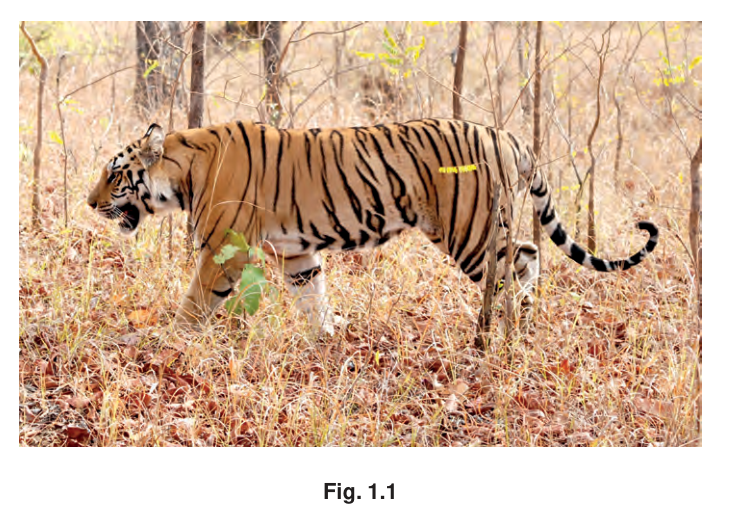
Table 1.1 shows the relationship between available forest habitat and Bengal Tiger numbers between 1970 and 2010.
Table 1.1
| year | forest habitat remaining compared to 1970 (%) | Bengal Tiger numbers |
|---|---|---|
| 1970 | 100 | 37 000 |
| 1980 | 79 | 27 000 |
| 1990 | 42 | 12 000 |
| 2000 | 26 | 3 600 |
| 2010 | 18 | 1 400 |
Calculate the percentage decrease in the number of Bengal Tigers between 1970 and 2010.
Give your answer to the nearest whole number.
answer = ______
Suggest methods to conserve the Bengal Tiger.
The Bengal Tiger belongs to the kingdom Animalia. State two differences between members of the kingdom Animalia and the kingdom Plantae.
The rest of this paper
10 more questions- Q2Inheritance · (outdated) Biotechnology10M
- Q3(outdated) Aspects of Human Reproduction14M
- Q4(outdated) Crop Plants · Inheritance · Photosynthesis14M
- Q5Genetic Technology8M
- Q6Energy and Respiration11M
- Q7Homeostasis7M
- Q8Selection and Evolution5M
- Q9Control and Coordination8M
- Q10Photosynthesis15M
- Q11Inheritance15M