Biology 9700/42 — October/November 2011
Cambridge A-Level · A Level Structured Questions · worked solutions for every part, with the mark scheme
Topics Control and Coordination · Selection and Evolution · Inheritance · Energy and Respiration · Genetic Technology · Classification, Biodiversity and Conservation · +3 more
The Ethiopian wolf, Canis simensis, is a member of the Canidae family of carnivores.
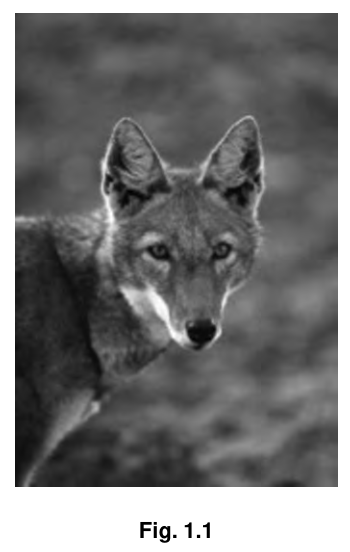
Fig. 1.1 shows an Ethiopian wolf.
Ethiopian wolves evolved from an ancestor similar to the grey wolf that crossed into Northern Africa from Europe about 100 000 years ago.
They live in the alpine grasslands and heathlands at, or above, altitude in Ethiopia.
State the most likely type of speciation that led to the evolution of the Ethiopian wolf.
A population of Ethiopian wolves is called a pack.
Heterozygosity has been found to be low in all of the packs of Ethiopian wolves that have been studied.
Suggest why the heterozygosity may be low in Ethiopian wolf packs.
The Ethiopian wolf is classified as an endangered species by the International Union for the Conservation of Nature and Natural Resources (IUCN). It publishes an annual list of endangered species called the Red List.
Complete Table 1.1 to summarise four of the main reasons, with further explanation, as to why the Ethiopian wolf has become an endangered species.
Table 1.1
| reason | explanation |
|---|---|
| an activity that accompanies human expansion and reduces the size of the wolf habitat | |
| rabies, a lethal viral disease of wolves | |
| a human activity to control wolves, considered to be pests | |
| the result of wolves breeding with domestic dogs |
According to the Red List, the number of endangered mammal species in 2007 was 349 and in 2008 was 448.
Calculate the percentage increase in endangered mammal species between 2007 and 2008.
Give your answer to the nearest whole number.
Show your working.
answer = ______
The rest of this paper
10 more questions- Q2Homeostasis15M
- Q3(outdated) Aspects of Human Reproduction · Control and Coordination8M
- Q4Energy and Respiration · Control and Coordination · Inheritance · Selection and Evolution17M
- Q5Genetic Technology7M
- Q6Energy and Respiration9M
- Q7Genetic Technology7M
- Q8Control and Coordination · Inheritance · Selection and Evolution6M
- Q9Inheritance7M
- Q10Photosynthesis15M
- Q11Control and Coordination15M