Biology 5090/21 — May/June 2019
Cambridge O-Level · Theory · worked solutions for every part, with the mark scheme
Topics Respiration · Human Gas Exchange · Inheritance · Sexual Reproduction in Plants · Plant Nutrition · Biological Molecules · +9 more
A seal is a mammal that spends most of its time in the sea. It breathes and respires in a very similar way to a human, but when it dives to hunt and catch fish, it is capable of staying under water for up to 20 minutes.
The graph shows the percentage concentrations of oxygen and carbon dioxide, and the concentration of lactic acid in a seal's blood over a 40 minute period during which it dives to hunt and catch fish.
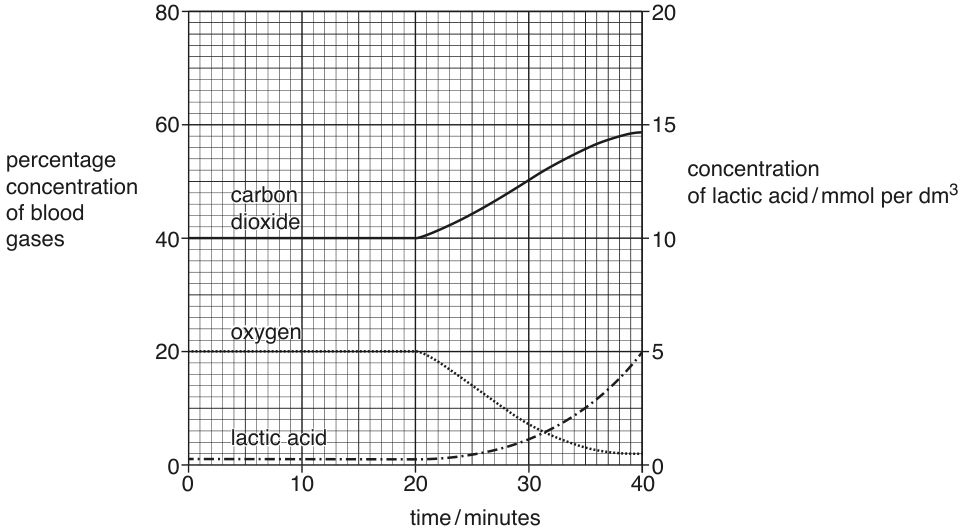
State the chemical process that is taking place in the seal's muscles before it dives.
______
State how long after the start of the time period the seal begins its dive.
______
State the percentage of oxygen in the seal's blood 40 minutes after the start of the time period.
______
Name the chemical process which starts to take place in the seal's muscles during its dive and explain how the graph supports your answer.
process = ______
explanation = ______
Suggest and explain what would happen to the concentration of lactic acid in the seal's blood when it returns to the surface of the sea after its dive.
______
The rest of this paper
8 more questions- Q2Inheritance10M
- Q3Sexual Reproduction in Plants · Biological Molecules · Plant Nutrition · Enzymes10M
- Q4Sexual Reproduction in Plants9M
- Q5Coordination and Control · Sexual Reproduction in Humans11M
- Q6Movement Into and Out of Cells · Human Nutrition10M
- Q7Excretion · Human Gas Exchange · Plant Nutrition · Respiration10M
- Q8Inheritance10M
- Q9Disease and Immunity · Classification · Cell Structure and Organisation10M