Biology 5090/31 — October/November 2017
Cambridge O-Level · Practical Test · worked solutions for every part, with the mark scheme
Topics Experimental Contexts · Planning Experiments and Investigations · Observations and Measurements · Analysis, Conclusions and Evaluation · Microscopy and Biological Drawing · Use of Techniques, Apparatus and Materials
Dried yeast may be activated by adding it to a solution containing sugar. When it is active, it produces bubbles which form froth on the surface of the mixture. The greater the activity of the yeast, the more froth is produced.
You are going to investigate the activity of yeast in solutions of different sugars. The activity will be assessed by measuring the height of froth produced by the yeast after 5 minutes and 10 minutes.
You are provided with 4 large test-tubes, solutions of three different sugars (5% glucose, 5% lactose and 5% sucrose) and distilled water.
- Label a large test-tube W. Use the measuring cylinder or syringe provided to pour of distilled water into test-tube W.
- Label a large test-tube L. Measure of 5% lactose solution and pour it into test-tube L.
- Rinse the measuring cylinder or syringe with water from the beaker labelled water for rinsing and pour the waste water into the beaker labelled waste water.
- Label a large test-tube G. Measure of 5% glucose solution and pour it into test-tube G.
- Rinse the measuring cylinder or syringe with water from the beaker labelled water for rinsing and pour the waste water into the beaker labelled waste water.
- Label a large test-tube S. Measure of 5% sucrose solution and pour it into test-tube S.
Put the 4 test-tubes into the beaker labelled water bath. When ready, raise your hand to request hot water which the Supervisor will pour into your water bath.
Check that the temperature of the water bath is between and . Adjust this if necessary by asking for more hot water or by using cold water.
- Leave your 4 test-tubes in the water bath for 5 minutes.
Then add dried yeast to each of the test-tubes as follows.
-
Carefully pour all the contents of one small packet labelled yeast into test-tube W. Stir the mixture vigorously with a glass rod and return the test-tube to the water bath. Wipe the glass rod with a paper towel.
Note the time (W) ______
-
After 30 seconds add all the contents of another packet of yeast to test-tube L. Stir vigorously with a glass rod and return the test-tube to the water bath. Wipe the glass rod with a paper towel.
Note the time (L) ______
-
Repeat this process for test-tubes G and S.
Note the times (G) ______ (S) ______
Five minutes after adding yeast to test-tubes W, L, G and S, use a ruler to measure the height of any froth above the yeast mixture. Record your measurements in Table 1.1 and return the test-tubes to the water bath.
Follow the same procedure 10 minutes after adding yeast to test-tubes W, L, G and S, and record your measurements in Table 1.1.
Table 1.1
| test-tube | height of froth / | height of froth / |
|---|---|---|
| after 5 minutes | after 10 minutes | |
| distilled water (W) | ||
| 5% lactose (L) | ||
| 5% glucose (G) | ||
| 5% sucrose (S) |
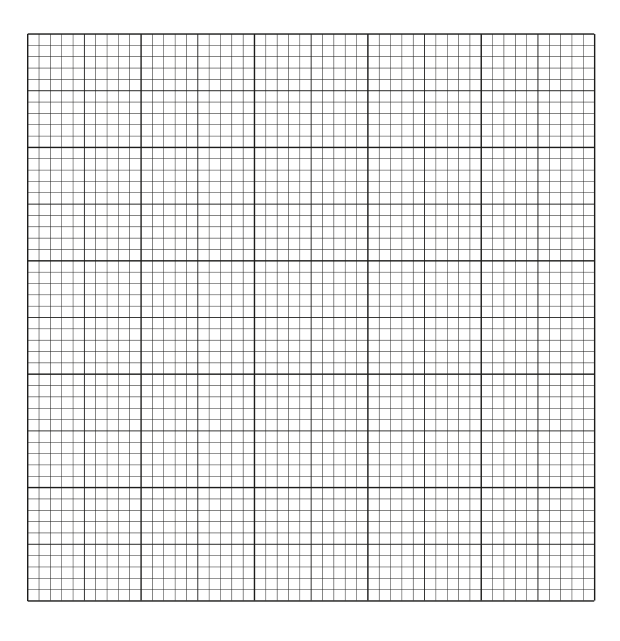
Construct a bar chart to show the height of froth produced in each of the 4 test-tubes after 10 minutes.
Describe what you can conclude about the activity of yeast from your results.
State the name of the process taking place when yeast produces bubbles which form froth.
______
State the name of the gas that was produced to make the froth above the yeast mixture.
______
Explain why the 4 test-tubes, W, L, G and S, were placed in the water bath for 5 minutes before the yeast was added.
Explain why test-tube W containing yeast and distilled water was used in the investigation.
Suggest why yeast is less active with some sugars than with others.
The results of your investigation may not be reliable. Describe what you could do to make them more reliable and explain why the results would be more reliable.
The rest of this paper
2 more questions- Q2Experimental Contexts · Planning Experiments and Investigations10M
- Q3Experimental Contexts · Microscopy and Biological Drawing · Use of Techniques, Apparatus and Materials12M