The principle of superposition
“
explain and use the principle of superposition
Two waves in the same place at the same time
Drop two pebbles a metre apart into a still pond. Two sets of circular ripples spread out — and where the rings cross, the water surface is doing something more complicated than either ripple alone. Yet listen to two people talking at once and you can still hear each voice unchanged through the other; shine two torch beams so they cross and neither beam bends. Waves have a property no solid object has: they can pass through one another and come out unchanged. After the crossing, each ripple continues exactly as if the other had never existed.
The interesting physics is not after the crossing but during it: while two waves overlap, what does the medium actually do at each point? That question has a one-sentence answer, and the whole of this topic — stationary waves, interference fringes, diffraction gratings — is that sentence applied over and over again.
The principle, stated for the mark scheme
The principle of superposition: when two (or more) waves meet at a point, the resultant displacement is the sum of the individual displacements (M1 for "waves meet", A1 for "displacement = sum").
Three details of the sentence carry the marks, and each is a favourite wrong option when it is missing:
- it is the displacement that adds: a signed quantity, positive or negative about the equilibrium position. Not the amplitude, not the intensity, not the energy;
- the sum is taken at each point, at each instant, point by point;
- nothing is required of the two waves for the principle to apply. They need not have the same frequency, amplitude or direction. Any overlapping waves of the same type superpose.
Adding displacements point by point. Panel (a): two crests of the same sign overlap and the resultant is their sum — a taller pulse. Panel (b): a crest (+58) meets a trough (−42) and the displacements subtract, leaving a small pulse of +16.
Adding displacements point by point
To superpose two waves, walk along the axis and at each position add the two displacements with their signs: crest (+) plus crest (+) gives a bigger crest; crest (+) plus trough (−) gives the difference; equal crest and trough give exactly zero. A simple example: a pulse of displacement overlaps a pulse of .
At the overlap point, add the signed displacements:
The resultant at that instant is a displacement of below equilibrium — the bigger trough wins, but only by the difference. And the moment the pulses pass each other, each continues with its original shape and size, completely unscarred by the meeting.
Two named special cases recur so often they carry their own labels:
- constructive — the waves arrive in phase (crest on crest), so displacements add to a maximum: two equal waves of amplitude give a resultant of amplitude ;
- destructive — the waves arrive in antiphase (crest on trough), so displacements cancel: two equal waves give zero.
Between those extremes, every other phase difference is possible, and the resultant is always just the point-by-point sum. With unequal amplitudes, even antiphase waves do not cancel completely — as the worked example below shows.
Superposing two water waves on a grid
Two progressive water waves and travel along a straight line from point to point . The variation of displacement of the waves with distance from at an instant in time is shown in Fig. 3.1.
Wave and wave superpose to form a resultant wave.
On Fig. 3.2, sketch the variation of displacement of the resultant wave with distance from at the instant of time shown in Fig. 3.1.
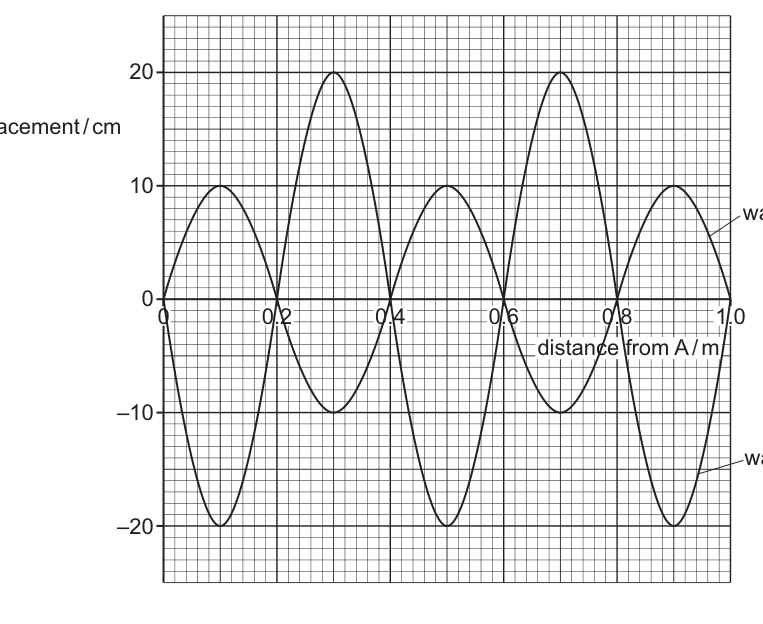
Fig. 3.1 — displacement of waves X and Y against distance from A (9702/22 M/J 2025 Q3)
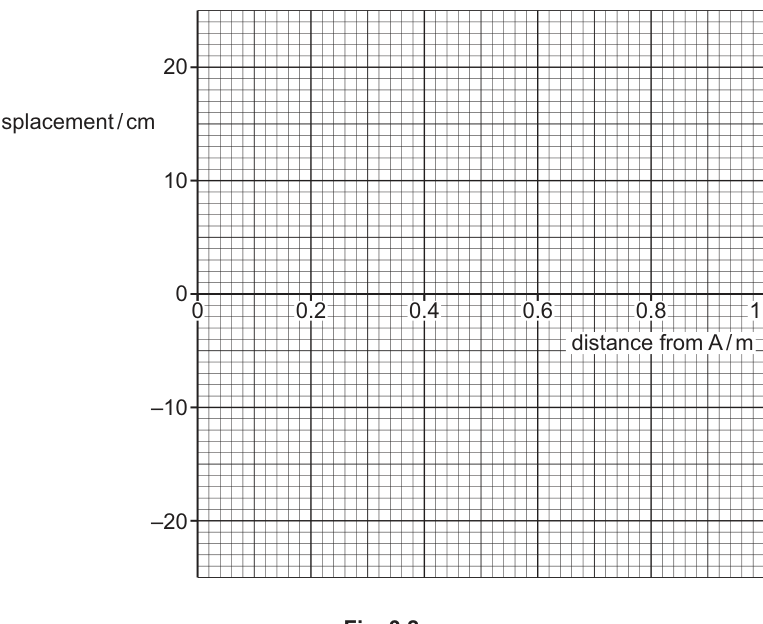
Fig. 3.2 — the grid provided for the sketch
Show full working
Answer sketch: the resultant of waves X and Y is one smooth negative sine of amplitude 10 cm and wavelength 0.40 m.
- 1
Read each wave off Fig. 3.1 first. Wave X: amplitude , wavelength , a positive sine (displacement rises above the axis from ). Wave Y: amplitude , wavelength , a negative sine (goes below the axis from ) — exactly antiphase with X.
Superposition questions on graphs are read-then-add questions. Nail down amplitude, wavelength and sign for EACH wave before adding anything — mixing up which wave is the tall one poisons every later line.
- 2
Apply the principle point by point. At each distance, resultant displacement :
Sample the sum at the easy positions — zeros and extremes — rather than trying to add two curves everywhere at once. The signs do the work: Y's antiphase trough sits on X's crest, so the sum is the DIFFERENCE of amplitudes, 20 − 10 = 10 cm, in Y's (negative) direction.
- 3
Join the points and recognise the shape. The sampled values trace a single smooth negative sine wave of amplitude and wavelength (B1: single wave of amplitude 10.0 cm; B1: negative sine of wavelength 0.40 m).
Because both waves share the same wavelength and are exactly antiphase, the resultant is itself a pure sine — not a lumpy mixture. Draw one smooth curve through your sampled points; a zigzag joining straight lines is the classic lost-shape error.
A single negative sine wave: amplitude , wavelength — the two antiphase waves partially cancel everywhere.
Antiphase waves of the same wavelength superpose to a single sine whose amplitude is the DIFFERENCE of the amplitudes, in the direction of the bigger wave. In-phase waves superpose to a single sine of the SUM. Both are just point-by-point addition — never memorise without the adding behind it.
"Superposition means the amplitudes of the two waves add."
The principle is about DISPLACEMENT: the resultant displacement at a point is the sum of the individual displacements. Amplitudes only add in the special case of waves in phase.
The A1 credit is for 'displacement … sum of the displacements'. 'Amplitudes add' loses it — amplitude is a size, displacement is a signed quantity, and the sign is what makes cancellation possible.
"The principle applies only when the two waves have the same frequency (or amplitude)."
The principle applies ALWAYS, for any overlapping waves — same frequency or not.
Conditions belong to the special RESULTS built on the principle (stationary waves, steady fringes), not to the principle itself.
Drawing the waves destroyed or permanently altered after they overlap.
Each wave continues through the overlap with its original shape, amplitude and wavelength — the sum applies only while they share the same region.
Waves are not billiard balls: they interpenetrate freely. Questions that show 'before and after' snapshots are testing that nothing has changed.
Adding displacements without signs: for the M/J 2025 waves.
Add signed displacements: at a crest of X, .
Forgetting the sign turns partial cancellation into reinforcement: +30 cm instead of −10 cm. Ask at each point: is each displacement above (+) or below (−) the axis?
Your turn
The verbatim definition, an always-applies MCQ, and a signed-addition drill.
- 19702/24 O/N 2025 Q4(a)2 marks
State the principle of superposition.
Stuck? Show hint
Two clauses: what the waves do, and what the resultant is.
Show solution
- 1
When two (or more) waves meet (at a point) (M1), the resultant displacement is the sum of the displacements of the individual waves (A1).
The scheme splits the marks exactly: M1 for the meeting, A1 for displacement-sum. Both clauses must appear; 'waves add up' earns neither.
AnswerWhen two or more waves meet, the resultant displacement is the sum of the individual displacements.
- 1
- 29702/13 M/J 2025 Q291 mark
Two waves of the same type overlap.
When does the principle of superposition apply?
Options
A always
B only when the waves have the same amplitude
C only when the waves travel in opposite directions
D only when the waves have the same frequencyStuck? Show hint
Is there ANY requirement written into the principle itself?
Show solution
- 1
The principle says only: waves meet → displacements add. No condition on frequency, amplitude or direction appears in the statement, so it applies always — A.
Options B–D each smuggle in a requirement that belongs to other results (equal amplitudes for total cancellation, opposite directions for stationary waves, same frequency for steady fringes). The principle itself is unconditional.
AnswerA — always; the principle carries no conditions on the waves.
- 1
- 3
A pulse of displacement travels along a rope towards a pulse of displacement travelling the other way.
(i) State and calculate the resultant displacement at the instant the pulses exactly overlap.
(ii) State what each pulse looks like a moment AFTER the overlap.Stuck? Show hint
(i) Signed addition. (ii) What does the principle NOT change?
Show solution
- 1
(i) Add the signed displacements:
The trough is bigger, so the resultant is 2.0 cm below equilibrium — the difference, not the sum, because the signs oppose.
- 2
(ii) Each pulse emerges unchanged: a crest and a trough, same shapes, travelling on as before.
Waves pass through each other with no permanent effect — the superposition sum describes only the instant of overlap.
Answer(i) (2.0 cm below equilibrium). (ii) Both pulses continue unchanged.
- 1
The rest of this note
Can you do all of these?
State the principle of superposition: when two (or more) waves meet, the RESULTANT DISPLACEMENT is the SUM of the individual displacements — for any waves, same frequency or not
Add displacements point by point with their signs; in phase gives the sum of amplitudes, antiphase the difference
Explain stationary-wave formation in four clauses: the wave reflects → incident and reflected waves superpose → antinodes where the amplitude is maximum → nodes where it is zero
A stationary wave transfers no net energy along its length; its amplitude varies with position
Adjacent nodes (or antinodes) are λ/2 apart; node to nearest antinode is λ/4; N nodes span N − 1 gaps
All points between two adjacent nodes oscillate IN PHASE; points in ADJACENT loops are in ANTIPHASE; all points have the same frequency
Describe the microwave (probe and metal sheet), string (vibration generator, pulley and masses) and air-column (loudspeaker, dust heaps at nodes) experiments
String fixed at both ends: n loops, L = nλ/2, f_n = nf₁
Pipes: NODE at a closed end, ANTINODE at an open end; closed pipe → odd quarters, odd harmonics only; open pipe → half-wavelengths, all harmonics
Resonance tube: first resonance at λ/4, successive resonances λ/2 apart; the note becomes much louder at resonance
Diffraction = a wave SPREADS OUT as it passes through a gap or around an obstacle; most spreading when the gap is about one wavelength
Lower frequency → longer wavelength (same v) → more diffraction; amplitude has no effect
Coherent = CONSTANT PHASE DIFFERENCE (so the same frequency); 'in phase' is not required
Path difference: divide by λ; for in-phase sources nλ → maximum, (n + ½)λ → minimum; add any source phase difference first
Intensity ∝ amplitude²: two equal waves in phase give 4 times the intensity of one; unequal amplitudes make the dark fringes less dark
Conditions for observable fringes: coherent sources, overlapping waves, similar amplitudes, fringes far enough apart to see
λ = ax/D: identify a, x and D and convert to metres; x is ONE fringe separation — divide a multi-fringe length by the number of GAPS
x = λD/a: bigger D or λ (lower f) → wider fringes; bigger a → narrower; intensity → no change
Grating: d = 1/N in metres; sin θ = nλ/d; n_max = d/λ rounded DOWN; total maxima = 2n_max + 1
An angle quoted between matching orders on both sides is 2θ — halve it
Measuring λ with a grating: tan θ = y/L from the screen, then λ = d sin θ / n; do not use sin θ ≈ tan θ for grating angles
Calculator in DEGREE mode; convert nm, mm and cm to metres before substituting